Second Circle: Voxlauer lives through some of the most traumatic episodes in Europe's modern history, which you've detailed in a very intimate and scrupolous manner. I'm curious about what resources you were drawing on while writing this novel, both from your own experiences and in terms of materials and documents.
JW: Basically, the romance, the love story central to the book, was the germ of the whole idea and all of the other plot elements and even down to the historical settings, even that had I might almost say a cynical and a sincere motive. On a sincere level, I really wanted to remember what it was like before I had ever had sex and then once when I was in my first relationship, which was a very important relationship for me. On the other hand, I was thinking, you know, well, I tried to write a novel before, I couldn't get past page forty, it was totally aimless and self-indulgent. First of all, let me get some subject matter that I can get into. That was a very morbid phase of my life. I was living in this horrible, dank basement, I wasn't going out, I didn't have a relationship or anything, and I was really in a morbid frame of mind and dwelling in the past. So I thought: Okay, maybe the thing to do is to take this experience and put it in, not really an allegorical form, but just transpose it from one time and place to another time and place. Well what time and place first of all? And then I thought about Austria where I grew up, and where I spent all my summers. I'm always thinking about that place, when I want to cheer myself up anyway. Which is funny, because when you read the book it's not the cheeriest.
2ndO: And you've got a very evocative sense of nature and landscape.
JW: My family still has a house, the house in which my grandmother, and my mother and my uncle grew up. We still own it and it's still in this beautiful little town. People who have come and visited me there and who have read the book, all commented on it. It is an imaginary town because none of the events happened. In fact, there were no Jews ever since the Middle Ages in the town my family is from, except for passing through, but no actual resident population as far as anyone can determine. Because it was one of the "bishop's towns". It actually belonged to the Bishop of Salzburg. It was a tiny little island, like Vatican City, independent of the empire. Of course there were no Jews in the Bishop's own private city, needless to say. In that sense, I was drawing very heavily on the most primary of all resources, which are my childhood memories and my continuing relationship with the town. I have the town completely in my head so I didn't need to make up a map. Obviously, with all the natural description, I've spent so much time there while I was writing the book--at least in the summers when I was there. I had this running route that goes up into the hills and through this hanging valley with the two little ponds. So I was seeing it every day. It's really such a beautiful patch of ground, no question about it.
It's very strange now that I think about it, the relationship that I drew on for Voxlauer. I was thinking I don't want this to be a coming-of-age novel; I don't want the protagonist to be an adolescent, because an adolescent is only going to have so direct a role in the political events. An adolescent can only really be an observer for the most part. I want this person to be a fully-grown adult. Obviously, there were adolescents who were directly involved in the goings on, but I wanted someone that I could identify with more. And also, I often thought when I was trying to characterize my state of mind, which is a very interesting state of mind, the state of mind that I was in in my late adolescence before my first relationship. I always thought of it as someone in a state of shell-shock because I had a very bad grade school and high school, about as bad as it gets. I remember when I first got to college, I was weirdly, hermetically sealed. Also I was interested in the First World War and if my protagonist was to have experienced the war at all, unless as a tiny child, he was going to be in his thirties. And at that point I started going to outside sources and doing a lot of reading. I read a bunch of stuff about the First World War: I had this great, one volume history of the war by this historian, Martin Gilbert, which is particularly good because again and again he focussed on individuals. I remember the English poet Siegfried Sassoon was often talked about, but also many non-luminaries were also looked at and discussed. Almost all of them end up dying at some point. For me that was probably better than a very, very specialized, scholarly text on the war would have been.
The greatest thing that I learned doing this research, deals with the assassination of the Austrian Chancellor, Of course, I wanted to have the larger details of that failed putsch straight in my head, but I particularly wanted the details that immediately proceeded and followed the act of shooting Dollfus, I wanted to have really straight. So I read the account of it in The Nazi Seizure of Power, the account of it in this book I got from Duke University Press called Hitler and the Forgotten Nazis--it was all about the Austrian Nazi movement. I read the popular account of it in The Rise and Fall of the Third Reich. I read Chancellor's Schuschnigg's personal memoirs of the event. And his was actually a first-hand account. And I read even a fifth source, I can't recall what it was, and they varied so incredibly you can't believe it--where he was shot, what circumstances led to the shooting, whether he was trying to escape, whether he was simply shot in cold blood, the number of shots, where he was hit by the bullets, things you would think could be verified by any autopsy. It was unbelievable; no fact was corroborated by more than one other account. Maybe at the most three accounts would say the one thing and then two of the accounts would say something completely different: he was heading for a staircase, he was going for a window, you know? He was trying to escape, he was on his knees with his face to the wall. Unbelievable. Really, for a historian that would be deeply depressing, in fact, they'd be medicated after. It would really matter to them, especially when all witnesses are long dead, there's no going back to them.
2ndO: And probably pretty unreliable too.
JW: You'd have to be an unbelievably good investigative historian somehow. But for me it was fantastic. It meant that he had to be shot, this person had to shoot him, maybe, not even that really, and the general circumstances had to have such and such a result. But actually I could say whatever the hell I wanted to and if anyone ever busted me about, in my naivete at that time I thought that people really cared, I don't think that any reader of fiction ever really has history in mind when they're reading at all.
2ndO: What's curious is that the two characters, Voxlauer and Kurt, have such contrasting sections devoted to their memories of events. Voxlauer is suffused with misery and loneliness and Kurt is given a similar amount of the book to talk about a much narrower period. He gives this potted view of history where you see explicitly what went on with the putsch. And then after that five years go by, the Anschluss comes on, we don't even know who's in power or how this occurred, because Voxlauer's off in the wilderness in a form of internal exile. Everything remains, mysterious and vague, we know there are big things happening out there in the world.
JW: First of all, Voxlauer is conscious of his remorse and is very actively conflicted about many of the events that shape his first person account. When in fact there's little he could have done, but still he's killed someone. Whereas Kurt is a far more sociopathic character and he simply doesn't feel remorse to that degree. He feels regret because he's a frustrated man. I would say that on a deeper, less conscious level, there are some real conflicts raging in him. Not to say that Voxlauer moralizes terribly, that he's an overtly moral person. But he certainly conjures up his trauma in a way that Kurt is not capable of. They're certainly different people. In many ways they're similar; I wanted there to be a real symmetry there, not only in the way they're formally laid out but also these are two ways that two men of similar age could have gone and at one point in each account the speaker is ordered to kill someone with very different and highly significant responses in both cases. In Voxlauer's case in more of an internal way even though it probably did precipitate his actual desertion And in Kurt's case more of an outward way; it made his later successes within the German SS possible, because he played ball, did the dirty work, and paid his dues in that way. Actually, for both men it was intended as a paying of dues, Kurt doing this dirty work that no actual member of the SS could do because it was killing another SS man and Voxlauer allying himself with the Hussars, with the Loyalists, and putting himself in the most dramatic way possible in an antagonistic position towards deserters. It was also a very common practice for officers, whose duty it was to kill deserters, to delegate that to people who were not even suspected necessarily of deserting themselves. Sometimes they were out of favor in the company, sometimes they had committed some transgression, and sometimes they hadn't done anything, they were just ordered. And many men were traumatized by that, because especially as the war dragged on it was very common. Many, many English accounts of the war have that as almost the most traumatic event.
2ndO: Later on at the church, Voxlauer says to Kurt that all he feels is fear. I was curious how to take that statement. He does find a sort of peace mediated by nature, but by the point he's talking to Kurt almost everything present in his life has wandered away, signified mostly by the bees abandoning their hive. Has he collapsed into his fears and is merely towing the line, or is he screwing with Kurt some more?
JW: Whether in an absolute sense it's true or not, I did intend that moment as an epiphany, if you can call it that, for Voxlauer. He's overstating the case, perhaps, and maybe he's always been aware of it, but certainly he's never articulated it to himself the extent to which almost all of his actions are if not dictated then at least informed by this all-encompassing fear brought about by certainly his war-time experiences but on a more fundamental level by his father's suicide and even before that by his father's illness. That has a very hugely traumatizing impact on a kid. His father's obviously a very fearful man, and he inherited that from him. It could certainly be argued that if there were one emotion more than any other that seems to have drawn the blueprint from Voxlauer's reactions at any given moment, even these violent outbursts that he has, these moments of rage and violence, the anger that he's expressing there is not even so much a political anger, for example in the fighting in the bar, it's not even so much that he's saying, 'How dare you say that to the dear and cherished niece of my friend,' but rather he comes home to escape this fear that he felt. Certainly in the Ukraine under the Soviets, and before as an outsider, as a foreigner, and even as a subject of the regime, he felt tremendous amounts of fear. He's returning, coming back to his mother, regardless of how successful or unsuccessful that is, in this hope that he won't be afraid, at least on a daily basis. At least, he'll be far away from things that he's afraid of. And then when the event happens in the bar he just realizes that he's going to have to be afraid all over again. That's what emboldens him, the boldness derives from the panic rather than any kind of bravery.
2ndO: It sounds very much like the descriptions of soldiers' experiences in war. By the time you've spent a month at the front, you're shellshocked and more or less demoralized. After that, a lot of what keeps people in line is simply the fear of what their buddy is going to think of them if they let them down.
JW: And also the certainty of someone who's there on the other side of the lines about to blow your brains out. The unknown is always much scarier, and the great unknown to someone who is contemplating desertion is, what the hell am I going to do after? What's the rest of my life going to be like? Where am I going to go? Who's going to take me in? Where can I possibly exist? That's also frightening. Even if they could escape their buddy and never have to see him again, where the hell are they going to go?
2ndO: The other side of this is that after the war you have any number of people claiming to be living in internal exile and it seems that your book takes up Gunter Grass's attack on that whole idea as being a contradiction in terms. Even Voxlauer, who has lived in actual exile, coming back he does the best that anybody possibly could to get outside of his society and still is willynilly drawn back in.
JW: It's completely impossible. It's just as impossible as people who tried to start anti-capitalist collectives in the United States back in the sixties and seventies. They quickly found out how impossible that was, particularly if you've been conditioned by a society to then sever your ties with that society completely. Even Voxlauer needs to buy his butter from the farmhouse. If you don't grow up being self-sufficient in a capital-free society, you're not going to be suddenly able to. Without doing away with capital, all you are is a citizen of the Reich, or of whatever country you find yourself, living in the suburbs. Every place is just the suburbs of the centers of power.
2ndO: One thing that hit me about the political climate of the book is that you start off in this decadent, end-of-the-empire world of Musil and Walser, writers who are very playful and working with the shards of their culture which has fallen apart. By the time you get to the thirties, things are senile--his father has committed suicide, his mother is out of it, there's nobody around to provide any kind of sense to understand the world around them. Kurt is surrounded by idiots; there's no sane process going on, no vision other than an grab for power.
|
2ndO: There's a wonderful story about a pair of Tibetan yak herders who showed up in a group of prisoners captured by the Canadian army. They couldn't find anyone to talk to them until a man who knew Tibetan turned up and sorted out their history. It turned out they had been picked up by the Russian army, none of whom spoke Tibetan, and made to fight on the Eastern front. Not that they had any idea why. They were then captured by the Germans who likewise had no Tibetan speakers and after fighting on the other side of the Eastern front in total confusion they were transferred then to the West where they had the good luck to be captured by the Canadians. The population shifts were so tremendous that it's not impossible to believe that one guy could end up anywhere.
JW: Obviously one of the characteristics of war if upheaval, dislocation, and chaos. There's never such migration at other times than in times of war, other than maybe the rare natural disaster or plague or something. A tremendous amount of this book came about in these organic and haphazard ways. There was a lot of tightening and rewriting for plausibility in later drafts. This book went through a lot of fucking drafts. It went through at least ten drafts. Which to me seems like a lot.
2ndO: Did you find yourself working on different elements of the novel in each draft?
JW: No. The first revision was largely a revision in terms of style. Then the second and third were largely, I tend to err in the direction of conciseness and not in verbosity. So once the book had been bought, my editor told me to add more here and more there, fix some things that were missing, certain characters were uninteresting because they were two-dimensional, they needed more. So most of what I did at my editor's behest was lengthening and deepening, filling things in. The book probably grew by a quarter or something during that process. And then all the other drafts were tinkering drafts, revising again for style. Every time I added sections, those needed to be brought up to par with the other stuff I had reworked. The first two or three revisions were structural and substantive, I guess you would say. But largely I'm just obsessed with rewriting. I would notice by the seventh draft that I was changing something back to fourth draft. That's when I realized it was getting to a ridiculous point.
2ndO: There's a concision to your imagery; and also your metaphors are precise and exact and unique, particularly when you are using the world around him to feed on.
JW: It's very interesting, the use of simile and metaphor in a period novel. Obviously the vast majority of associations that are going to come to your mind are going to be things from the contemporary world, things from the world we live in. So I would think, what were the bubbles in the ice like? Okay, they were like Pez. Or they were like tiny little flying saucers. Or they were like little shmoos. Or something like that. And obviously I had to keep going until I could think of something that he could, even though it's third person the narrative is obviously very closely associated with his consciousness, needless to say. More closely than in many third person books. I didn't want the narrator to be omniscient at all. I wanted the narrator to be an idealized, lyricised voice of Voxlauer in a sense. That was a real pain in the ass. The two biggest pains in the ass about it were exactly that: the struggle to find metaphors that were timely and not anachronistic in some way; and the swearing, fighting, thinking of ways people could insult one another or make fun of one another. That's where the most slang comes in. You can date language most accurately by the swear words and the slang, when people are joking around or when people are really angry. Generally, in this book, people speak extremely formally, which was perhaps an unfortunate result of the fact that it was incredibly hard to find idiomatic ways of speaking that wouldn't a) seem too contemporary, or b) seem too American, or c) seem too strangely translated from the German. The person who translated this back into German, it was probably interesting for them--I haven't talked to them--because at certain places they would probably recognize it was literally translated from the German and at other places I was making it up. An American reader, a reader who didn't speak German, would probably think that these are expressions used by Austrians, like "You goddamn tea-sipper." I can't remember whether I ended up using that or scrapping it. Or "Stack them straight." Those are all just made up; they're not anything taken from the Austrian at all. It's a sort of triangulation--you have English here and German here and here you have something that sounds plausibly German and yet will ring some sort of bells, however obliquely, in the English-speaking readers mind.
2ndO: Rather than to do as Hollywood movies using Germans speaking English with a German accent. It has that feel at times of being translated back into English. It makes for very interesting reading and plays with expectations.
JW: Right, people have been conditioned by translated works of famous European fiction. They are used to reading, particularly dialogue, they're used to reading it in translation, they're used to a certain awkwardness. So oftentimes I found myself mixing in a little awkwardness into the dialogue on purpose. I knew it would be a little clunky or awkward so that then the reader would think, 'Ah, yes, Europeans are talking.'
Paul McRandle
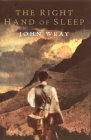
Now read on for a review by Fionn Meade of The Right Hand Of Dreams.
Contributions by Paul McRandle to The Second Circle:
Fishing For Amber by Ciaran Carson
The Jade Cabinet by Rikki Ducornet
The Tunnel by William Gass
The Melancholy of Resistance by Laszlo Krasznahorkai
Lights out for the Territory by Iain Sinclair
An Interview with John Wray
Fiction Collective 2 by Various
Brief Reviews including Raymond Federman and Iain Sinclair
|


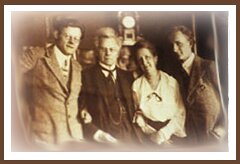 He was a first-born son and supposed to inherit my great-grandfather's farm in that town. So my great-grandfather got two telegrams, one informing him of his son's release and three hours later a telegram informing him of his son's death. Pretty amazing. So I played with that idea. My grandfather served in the Second World War for the German army, was a Prisoner of War in Russia and then had to walk all the way back. They let him go. He was somewhere northeast of Moscow I think, way up the fuck in the middle of nowhere. He had to walk, and hitchhike, and hop trains back. At one point I was playing with working that in somehow. I realized if Voxlauer was in the First World War it wouldn't make sense to make him a Prisoner of War of the Russians. But somehow it just ended up that he traveled all the way out there. I was sort of worried that he would turn into this Forrest Gump of World War One literature. But thusfar I think again what I have going for me is people's general historical ignorance; they don't realize how unlikely that may have been. I tried to make it sound as plausible as possible. The bonus that I then get is that Voxlauer was involved in one way or another with most of the interesting political events of the first half of the twentieth century.